
The 7 Biggest Mistakes Homeowners Make When Gifting Property.
This article explores 7 of the most common and costly mistakes homeowners make when gifting property, from misunderstanding inheritance tax rules to underestimating the loss of control. If you want to protect your wealth this guide is for you.
INHERITANCE TAX
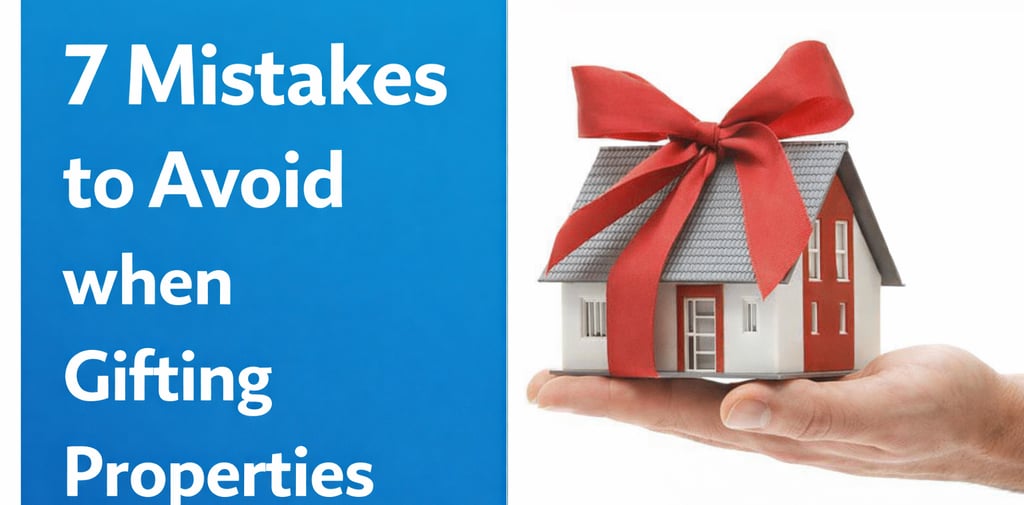
For many people, the family home is far more than just an asset. It represents security, memories, stability, and often the single largest component of their wealth. So it is completely natural to start wondering what will happen to it one day.
Should the house go to the children?
Should it be gifted early?
Should it sit inside a trust?
Should something be done now “just in case”?
These are sensible questions. The trouble is that property planning is one of those areas where good intentions frequently collide with harsh legal and financial realities. What feels logical at the kitchen table can sometimes turn into a very expensive lesson later.
After years of seeing families navigate these decisions, certain patterns appear again and again. Let’s walk through the seven biggest mistakes homeowners tend to make when thinking about passing their homes to the next generation.
Mistake 1: Making Decisions Out of Fear Rather Than Planning
This is by far the most common problem.
Rising care costs, headlines about inheritance tax, and horror stories from friends can easily create a sense of urgency. People begin to feel that they must “do something quickly” to protect the house.
Fear-driven planning often sounds like this:
“We need to get the house out of our names.”
“We cannot let the council take it.”
“We should sign it over before it is too late.”
The issue is not the concern itself. The concern is usually valid. The issue is rushing into irreversible decisions without fully understanding the consequences.
Property transfers are rarely simple administrative tweaks. They can affect tax, legal ownership, borrowing ability, benefits, and family dynamics. Once done, many of these decisions cannot easily be undone.
Good planning tends to be calm, structured, and boring. Panic planning is reactive, emotional, and risky.
Mistake 2: Assuming Gifting the Home Automatically Avoids Care Fees
This belief is incredibly widespread.
Many homeowners assume that if they gift their house to their children, the property will no longer count in any future care assessment. Unfortunately, this is not how the system works.
Local authorities are not just interested in when assets were transferred. They are also interested in why. If they believe a property was gifted primarily to avoid care costs, they can treat this as deliberate deprivation of assets.
In plain English, that means the house can still be included in the financial assessment as if the gift never happened.
This is where homeowners get caught out. They have legally given away ownership, yet they gain no protection from care fees. The worst possible combination.
Care planning is complex, varies across the UK, and depends heavily on timing and intent. It is never as simple as “gift the house and problem solved.”
Mistake 3: Underestimating the Loss of Control
Gifting a property feels emotionally safe because it is done within the family. But legally, ownership is ownership.
Once the house is no longer in your name, it is no longer your asset. Not partially, not symbolically, not morally.
Fully.
Even in close, loving families, life changes.
Children marry, divorce, relocate, face financial difficulties, or simply develop different priorities. A property held in a child’s name can become exposed to:
• Divorce settlements
• Creditor claims
• Bankruptcy
• Disputes between siblings
• Borrowing decisions you do not control
Many parents assume that “my children would never…” and in most cases they are right. The risk is rarely about bad behaviour. The risk is about unpredictable circumstances.
Control is one of those things people only appreciate once it is gone.
Mistake 4: Misunderstanding Inheritance Tax Rules
Inheritance tax planning is filled with half-truths and misunderstood rules.
The most famous example is the seven-year rule. Many homeowners believe that surviving seven years after gifting an asset guarantees inheritance tax savings.
Reality is more nuanced.
If someone gifts their home but continues living there without paying a full market rent, HMRC may treat this as a gift with reservation of benefit. In that scenario, the property is often still considered part of the estate for inheritance tax purposes.
In other words, the tax saving may never materialise.
There is also a broader issue here. Many families assume they have a serious inheritance tax problem when they do not.
Between the nil rate band and the residence nil rate band, couples can often pass on substantial value tax-free. Frequently, the real solution is not complex tax engineering but simply ensuring allowances are structured correctly within a will.
Inheritance tax is complicated, but it is rarely solved by impulsive gifting.
Mistake 5: Believing Trusts Are Magic Solutions
Trusts have developed an almost mythical reputation.
Somewhere along the line, many people absorbed the idea that placing a home into a trust automatically protects it from tax, care fees, and family complications.
Trusts are powerful tools, but they are not universal cures.
Different trusts serve different purposes. Some are excellent for control, some for asset protection, some for managing inheritance across generations. Very few deliver blanket tax avoidance, particularly where the homeowner continues benefiting from the property.
Trusts also introduce:
• Legal complexity
• Ongoing administration
• Potential tax implications
• Professional fees
They absolutely have their place. But they need to match the objective, be set up at the right time, and be designed with specialist advice.
A trust chosen for the wrong reason can be just as problematic as poor gifting decisions.
Mistake 6: Ignoring Family Dynamics and Future Uncertainty
Property planning is never purely financial.
Families are complicated ecosystems. Relationships shift, circumstances evolve, and assumptions made today may not hold tomorrow.
Questions homeowners often overlook include:
What happens if one child needs money early?
What if siblings disagree?
What if someone predeceases you?
What if a child’s marriage breaks down?
What if a new partner enters the picture later?
A plan that looks perfectly fair and logical now can unintentionally create tension later. Unequal benefits, unclear expectations, or ambiguous arrangements are common sources of family friction.
Clear documentation, realistic conversations, and properly drafted legal structures help avoid misunderstandings that otherwise surface at the worst possible time.
Mistake 7: Overlooking the Fundamentals
Ironically, while many homeowners worry about sophisticated strategies, they sometimes neglect the basics that matter most.
A properly drafted will remains the cornerstone of estate planning. Without one, even the best intentions can unravel under intestacy rules.
Lasting Powers of Attorney are equally critical. These documents determine who can make decisions if you lose capacity. Yet countless homeowners delay putting them in place because they feel “too early” or “unnecessary for now.”
Care planning, cashflow forecasting, and realistic assessments of future needs are also frequently ignored in favour of dramatic property transfers.
In many cases, families do not need exotic solutions. They need solid foundations.
The Bigger Picture Most People Miss
There is a theme running through all of these mistakes.
Homeowners often search for clever shortcuts when the real value lies in structured, informed Estate planning.
Passing property to the next generation is not just about avoiding tax or fees. It is about balancing control, flexibility, protection, and family harmony.
Sometimes gifting is appropriate.
Sometimes trusts are ideal.
Sometimes doing very little is the smartest move.
But the right answer always depends on the specific family, financial position, health outlook, and long-term goals.
A Sensible Way Forward
If property planning is on your mind, resist the urge to jump straight into transfers or complex arrangements.
Start by understanding your actual position.
Review your will.
Check your inheritance tax exposure.
Put Powers of Attorney in place.
Understand care funding rules.
Speak with qualified professionals.
Most importantly, approach the process with patience rather than urgency.
Homes are rarely lost because families planned too slowly. They are far more often jeopardised by decisions made too quickly, based on incomplete information.
Final Thoughts
Your home is not just a financial asset. It is your security, your stability, and often your safety net.
Decisions involving it deserve clarity, not panic. Strategy, not fear. Planning, not guesswork.
Because when it comes to property and long-term wealth, the goal is not simply to pass something on.
It is to do so without accidentally creating the very problems you were trying to avoid.
Blog content is for information purposes only and over time may become outdated as the tax landscape is constantly changing, although we do strive to keep it current and up to date. It is written to help you understand your taxes and is not to be relied upon as professional accounting, tax and legal advice. For additional help please contact a professional adviser.
Bookkeeping
Email:
Contact Us
support@rhodiumaccounting.co.uk
Monthly Management Reporting
Budgets & Forecasts
Cash flow Optimisation
Processes and Controls
Other Services

