Vinted Tax UK: The Complete Guide for Sellers in 2026/27
A complete guide to Vinted tax for UK sellers in 2026/27. When your sales are taxable, when they are not, how Vinted reports to HMRC, and what to do if you have been trading without declaring.
SELF EMPLOYMENT
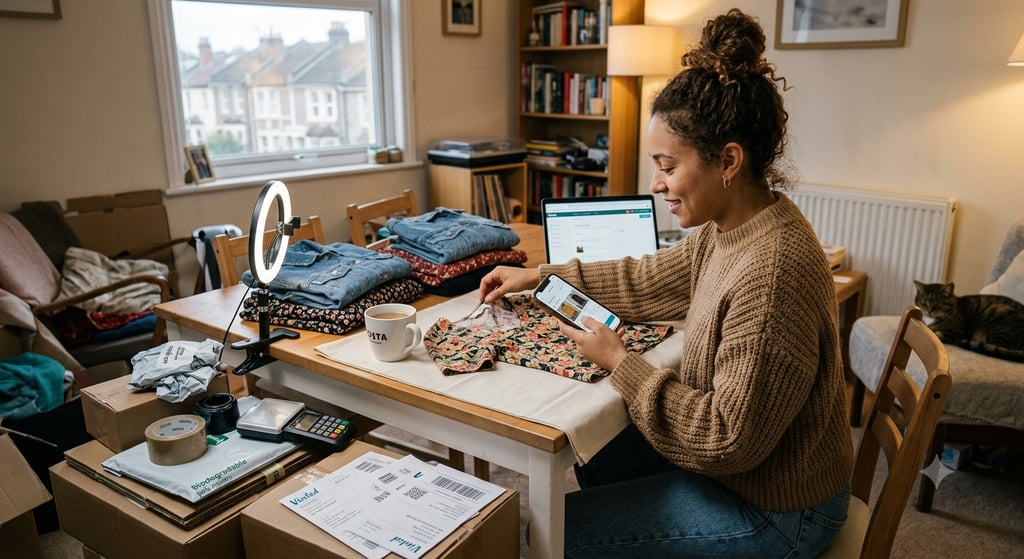

If you sell on Vinted and you have seen the headlines about HMRC cracking down on online sellers, you are probably wondering two things. Whether you owe tax. And whether you have already got it wrong.
The honest answer for most Vinted sellers is reassuring. If you have been clearing out your wardrobe, selling clothes you no longer want for whatever you can get, you almost certainly owe nothing and have nothing to worry about. The rules have not changed. What has changed is that Vinted now reports your sales data directly to HMRC, which means HMRC can check whether what you declared matches what you earned. For most casual sellers, that check confirms everything is fine. For sellers who have been buying and reselling with the intention of making a profit, the data means HMRC can now see it.
This post covers the full picture. When Vinted sales are taxable, when they are not, how Vinted reports to HMRC, where to find your gross sales figure, the fees structure that catches people out, and what to do if you have been trading without declaring.
When Your Vinted Sales Are Taxable and When They Are Not
The question that determines whether you owe tax is not how much you sold. It is what you sold and why.
Selling your own personal possessions is not taxable. If you bought a coat two years ago for £80 and sold it on Vinted for £35, that is not trading and it is not income for tax purposes. You are selling a personal item at a loss. It does not matter whether you sold one item or a hundred. Selling things you genuinely bought for your own use, wore or used, and then decided to pass on is outside the scope of income tax entirely.
Trading is different. If you buy clothes at charity shops, car boot sales or wholesale to resell on Vinted at a higher price, that is trading. If you source items specifically to sell at a profit, that is trading. If you sell regularly, buy and sell the same types of items repeatedly, or operate in a way that looks like a business, HMRC will treat it as trading and the income is potentially taxable.
HMRC uses a set of tests called the badges of trade to decide. The most relevant for Vinted sellers are whether you bought or made items specifically to sell, how frequently you sell, and whether your clear intention is to make a profit. A seller who buys 20 items from a charity shop on a Saturday morning with the specific intention of listing them on Vinted by the evening is clearly trading. A seller who lists 50 items from their own wardrobe over the course of a year is almost certainly not.
The line is sometimes genuinely blurry, particularly for sellers who started with their own wardrobe and then started sourcing items when they realised they could make money from it. If you are in that middle ground, the question to ask honestly is whether you are still selling things you owned or whether you are now running a business.
The £1,000 Trading Allowance
If you are trading, the next question is whether your gross income exceeds the £1,000 trading allowance.
Every person in the UK can earn up to £1,000 of gross trading income in a tax year without paying tax on it or needing to register for Self Assessment. Below £1,000, you have nothing to declare and no obligation to contact HMRC. Above £1,000, you need to register and file a tax return, though you may still owe little or no tax depending on your other income and expenses.
The critical word is gross.
The £1,000 threshold is your total sales before any deductions for fees, postage or costs. Our guide to the £1,000 trading allowance explains the allowance in full, including when it is better to claim actual expenses instead. The £1,000 threshold is your total sales before any deductions for fees, postage or costs. It is not your profit and it is not the amount you received into your bank account after Vinted took its fees.
This matters more for Vinted sellers than for sellers on some other platforms because of how Vinted's fee structure works, which we cover in detail below.
How Vinted Works: The Fee Structure That Trips Sellers Up
Vinted has no seller fees in the traditional sense. The platform charges the buyer a buyer protection fee on top of the item price, rather than deducting fees from the seller's payment. On the surface this looks appealing, but it creates a specific tax issue worth understanding.
When a buyer pays on Vinted, they pay the item price plus a buyer protection fee. You, as the seller, receive the item price in full. The fee is paid by the buyer and goes to Vinted.
This means your Vinted income is the item price you set. There are no platform fees deducted from your receipts for most standard sales. Your gross income on Vinted is therefore closer to your actual receipts than on eBay or Etsy, where fees come out of the seller's payment before it reaches their bank.
Where sellers do pay fees on Vinted is through optional promoted listings, bumps and other paid visibility tools. These are costs you pay to Vinted, not deductions from your sales, and they are claimable as a business expense if you are trading.
One practical point worth knowing. Vinted handles delivery through its integrated shipping system. The buyer pays a shipping fee to Vinted, which arranges the courier and provides the seller with a pre-paid label. The shipping payment goes directly between the buyer and Vinted and does not flow through the seller at all. This means buyer-paid postage is not part of your gross income on Vinted in the same way it would be on eBay, where the buyer's postage payment is collected by eBay, flows through the seller's total, and the seller then pays for the label separately.
How Vinted Reports Your Sales to HMRC
From January 2024, Vinted is legally required to report seller data directly to HMRC once a year. The first reports covering the 2024 calendar year were submitted in January 2025. Reports covering 2025 were submitted in January 2026.
Vinted reports your data if you cross either of two thresholds in a calendar year. The first is completing 30 or more sales. The second is earning roughly £1,700 or more in total sales, a figure based on the euro-denominated threshold in the international rules that the UK adopted.
If you cross either threshold, Vinted sends HMRC your name, address, date of birth, National Insurance number, and your transaction details including the number of sales and the gross amount you received.
Vinted is also required to share this information with you. You can find it in your Vinted account under account settings and then tax information, where your annual reporting summary is available. If you have been trading above the reporting threshold, it is worth checking what Vinted has shared so you know exactly what HMRC has seen.
The reporting threshold and the tax threshold are different. Being reported to HMRC because you crossed 30 sales does not mean you owe tax. If all 30-plus sales were personal items, you owe nothing. The data has been reported but a check of your situation will confirm everything is correct. The sellers who need to act are those whose gross trading income from genuine trading activity exceeded £1,000.
Where to Find Your Gross Sales Figure on Vinted
For tax purposes, your gross income on Vinted is the total of the item prices you received across the tax year, which runs from 6 April to 5 April the following year.
To find this figure, log into your Vinted account and go to your transactions history or sales summary. Vinted shows a breakdown of completed sales with the item price for each. Total these up for the tax year you are looking at.
If you have also paid for promoted listings or bumps, find these separately under your payments or billing history. These are costs to deduct, not income to add.
One important point. The UK tax year runs from April to April, not January to December. Vinted's reporting to HMRC covers the calendar year (January to December), which is a different period. When you are calculating your own tax position, you need the April-to-April total, not the calendar year total. These can differ meaningfully if you had a busy selling period in January, February or March.
What You Can Claim as Expenses
If your Vinted sales count as trading, the expenses you can claim against your income depend on whether you use the £1,000 trading allowance or claim actual expenses.
If your gross income is below £1,000, you can claim the trading allowance and pay no tax, so the expenses question does not arise.
If your gross income is above £1,000, you choose either the trading allowance or actual expenses, whichever is more beneficial. If your actual costs exceed £1,000, claim actual expenses. If your actual costs are below £1,000, the trading allowance is usually better.
Expenses you can genuinely claim if you are trading above £1,000 and claiming actual costs include the cost of items you bought to resell, packaging materials like bags and boxes, promoted listing and bump fees paid to Vinted, any travel costs incurred specifically for sourcing stock (such as petrol to drive to car boot sales), and a reasonable proportion of your phone costs if you use your phone for the Vinted business.
What to Do If You Have Been Trading Without Declaring
If you have been buying and reselling on Vinted for profit and have not declared the income, the best time to put it right is now, before HMRC contacts you.
Voluntary disclosure before HMRC makes contact results in significantly lower penalties than being caught later. In genuine non-deliberate cases with voluntary disclosure, the penalty can be as low as zero percent of the tax owed, plus the tax itself and any interest.
The process is to register for Self Assessment, file returns for the years you should have filed, and pay the tax owed. If the amounts involved are significant or you are unsure what you owe, this is exactly the type of situation where professional help is worth the cost.
If you have received a letter from HMRC about your Vinted selling, do not ignore it. Respond within 30 days, check your position honestly, and if you do owe tax, engage with HMRC promptly.
What This Means in Practice
The vast majority of Vinted sellers owe no tax and have nothing to worry about. Selling your own clothes is not trading. Crossing the 30-sale reporting threshold does not create a tax liability. Receiving a message from Vinted asking for your National Insurance number is routine and does not mean you are under investigation.
If you are reselling items you sourced specifically to sell, tracking your income against the £1,000 threshold and understanding your gross income before deductions is the single most important thing you can do to stay on the right side of the rules.
Get the UK Online Seller Tax Template, £14.99 →
The template tracks your gross Vinted income, separates personal item sales from trading sales, calculates your tax position including any day job interaction, and tells you whether you are above or below the £1,000 threshold in real time.
Bookkeeping
Email:
Contact Us
support@rhodiumaccounting.co.uk
Monthly Management Reporting
Budgets & Forecasts
Cash flow Optimisation
Processes and Controls
Other Services

