
The Mileage Expense UK Online Sellers May Not Be Claiming for Sourcing Trips and Post Office Runs
UK online sellers can claim 55p per mile for sourcing trips, post office runs and car boot sales. Most never do. Here's which journeys qualify and what the claim is actually worth.
SOLE TRADERS
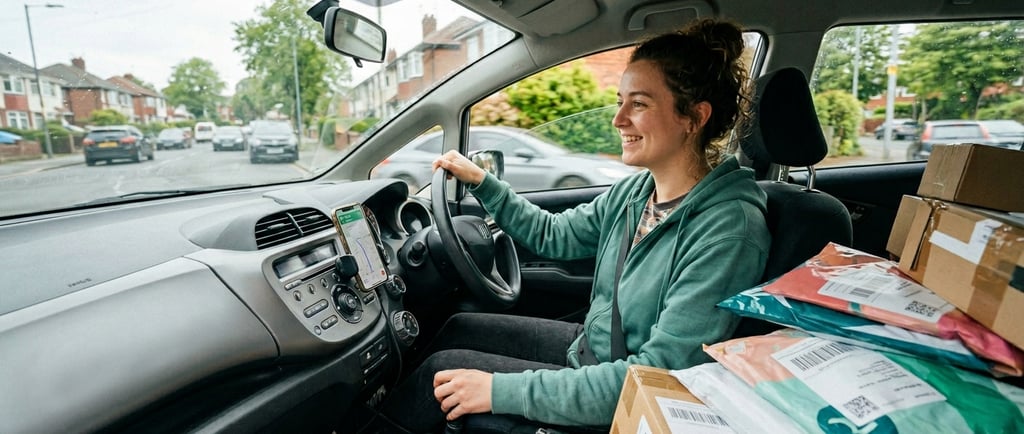
Most online sellers track their platform fees and what they paid for stock. Very few track their mileage, and with the HMRC rate now at 55p per mile from 6 April 2026, the unclaimed journeys add up faster than you'd think.
If you drive to source stock, run to the post office, or go to car boot sales to buy or sell, those journeys qualify as business mileage. This post covers which journeys count, which don't, what the claim is actually worth, and how to log it without making it a chore.
The Journeys Online Sellers Make But Rarely Claim
The mileage rate isn't just for people with company cars or sales reps covering hundreds of miles a week. It applies to any sole trader using their own vehicle for business purposes, including the kind of irregular, short-hop journeys that online selling typically involves.
Here's the decision matrix for the most common journey types.
What This Is Actually Worth
A seller making two sourcing trips a week to charity shops, averaging 6 miles round trip, drives around 600 miles a year on sourcing alone. At 55p that's £330 of claimable expense. Add 50 post office runs at 4 miles each and the total reaches £440, saving around £114 in tax at the basic rate.
Neither number is dramatic on its own. But combine them, add the cost of stock, platform fees, packaging and delivery, and the picture of what your business actually costs starts to look more accurate. The tax bill reflects real costs rather than just the money that came in. That's the point of expense tracking.
If you're close to the £1,000 trading allowance threshold and wondering whether to claim actual expenses instead, mileage often tips the calculation. A seller with £800 of platform fees and delivery costs might look comfortably within the allowance until they add 600 miles of sourcing trips at 55p, which pushes their total expenses to £1,130. At that point actual expenses are clearly worth claiming. Our full guide to the 55p mileage rate covers the mileage versus trading allowance decision in more detail.
Get the UK Online Seller Tax Template, £14.99 →
The Mixed-Purpose Problem
This catches people out more than anything else in mileage claims. The solution is straightforward: keep business trips separate. A dedicated sourcing run on a Saturday morning is fully claimable. The same route combined with a coffee stop and a personal errand is not. Given that the only cost of keeping them separate is a bit of scheduling, it's worth doing.
How to Log It Without It Becoming a Chore
You don't need dedicated software. A note in your phone immediately after each business journey is sufficient. Date, starting point, destination, purpose and miles. Thirty seconds. Most mileage app rejections in tax investigations come from logs that were clearly built in bulk at year end rather than trip by trip in real time. The contemporaneous note is what makes a claim defensible.
If you want to automate it, apps like MileIQ and TripLog track journeys via GPS and let you classify them as business or personal with a swipe. For sellers who make frequent short trips this is genuinely useful. For someone making two or three dedicated sourcing trips a week, the phone note is probably faster.
The log needs to cover date, start point, destination, business purpose and miles for each journey. Keep it somewhere you won't lose it. HMRC can ask for mileage records going back five years.
Vinted, eBay and Etsy: Does Platform Make a Difference?
No. The mileage claim works the same regardless of which platform you sell on. Whether you're a Vinted reseller sourcing from charity shops, an eBay seller driving to collect auction lots, or an Etsy maker driving to a craft supplier, the same 55p rate applies and the same rules govern what qualifies.
What does vary by platform is how the rest of your expenses work, particularly the gross income calculation and which costs are deductible. Our Vinted tax guide covers the Vinted-specific expense picture including the fact that Vinted's fee structure works differently from eBay's, which affects how you calculate deductible costs. HMRC's platform reporting rules, which now mean your sales data is shared automatically with HMRC once you cross certain thresholds, are covered in our post on how HMRC knows about your side hustle income.
Mileage and the Trading Allowance: The Decision You Need to Make
If you're using the £1,000 trading allowance, you can't also claim mileage or any other expense on top of it. The allowance is an either/or: either you claim it in place of all your actual expenses, or you claim your actual expenses including mileage.
For sellers whose combined expenses, platform fees, delivery costs, cost of stock and mileage, exceed £1,000, actual expenses are worth more. For casual sellers whose costs are genuinely below £1,000, the allowance is simpler and the result is the same or better. Mileage is often the thing that tips the balance, because it's easily missed and, once you add it in, the actual expense total often exceeds £1,000 by a meaningful margin.
The UK Online Seller Tax Template has a mileage and travel category in the Expenses tab. Enter your mileage claim for the year and the template factors it into your running tax position alongside every other expense, showing you which approach is better for your specific numbers.
Bookkeeping
Email:
Contact Us
support@rhodiumaccounting.co.uk
Monthly Management Reporting
Budgets & Forecasts
Cash flow Optimisation
Processes and Controls
Other Services

